Skip to content
RNWOOD Seoul
Signature Expertise

The Deep Plane Facelift

A facelift that treats the cause of facial aging, the deeper structural layers, rather than the symptom on the surface.

Technique

Beyond the skin

Unlike conventional facelifts that tighten only the skin, Dr. Ryu's Deep Plane Facelift works by releasing the retaining ligaments and lifting the deeper structural layers of the face. This allows for a more complete and natural correction of facial aging, especially in the anterior midface, where sagging often begins. The result is a smooth, youthful contour that moves naturally — never tight or artificial.
Signature Technique

The 8 Features of Dr. Ryu's Deep Plane Facelift

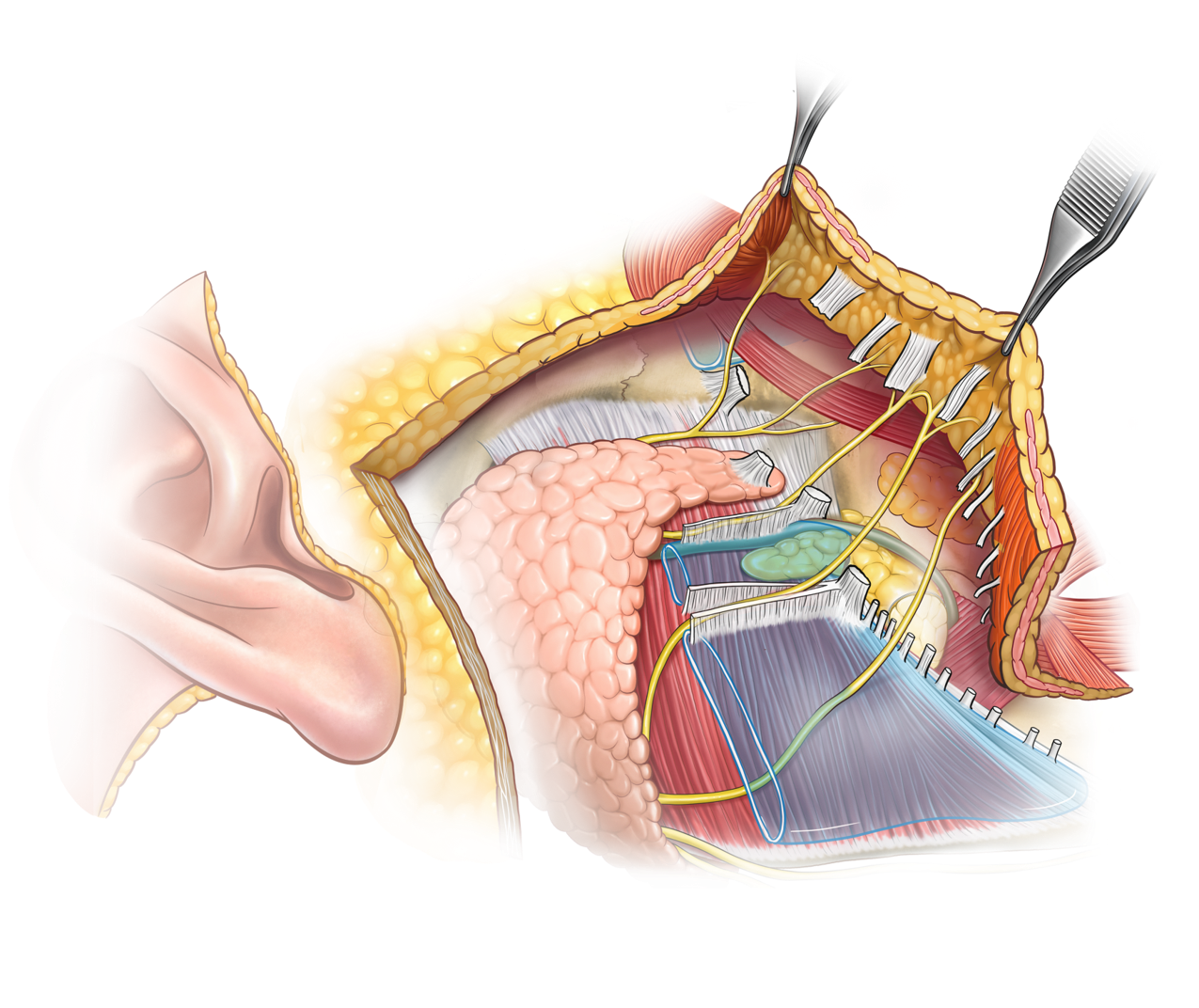
Deep Plane facelift dissection — SMAS flap elevated, retaining ligaments released, facial nerve branches preserved
Deep Plane dissection: elevating the SMAS and releasing the retaining ligaments while preserving the facial nerve branches.
01

Differentiated Lifting Results

Releasing the retaining ligaments lifts the deeper structural layers for a complete, natural, lasting correction.

02

Short Recovery Period

A composite-flap approach helps reduce complications and supports a quicker recovery.

03

Naturally Shaped Ears

Careful technique preserves a natural, untouched ear contour.

04

Minimally Visible Incisions

Incisions are placed and closed to remain discreet.

05

Pain-Free Experience

Designed for minimal pain and discomfort.

06

Natural Eye Shape & Elegant Lift

Refines the upper face while keeping the eyes looking natural.

07

Slightly Upturned Mouth Corners

A subtle, youthful lift at the corners of the mouth.

08

Only a 3-Day Compression Garment

Just three days of compression garment wear after surgery.

Five key concepts

Unique characteristics of Dr. Ryu's Deep Plane Facelift

01

Releasing the Retaining Ligaments

Releasing key facial retaining ligaments, including the zygomatic ligaments, allows the deeper facial tissues to move freely and be repositioned. By releasing these anatomical points of fixation, the facelift is not dependent on simply pulling the skin, allowing the underlying tissues to be restored in a more natural position.
02

High SMAS

Dr. Ryu incorporates a High SMAS approach to achieve more comprehensive control of the midface and lower face. By working at a higher level of the SMAS layer, the technique allows elevation and repositioning of tissues that contribute to midface descent, cheek flattening, and lower-face laxity. This helps create a more continuous transition between the cheek, nasolabial region, jawline, and neck.

03

Composite / Preservation Concept

The Composite / Preservation concept focuses on preserving and repositioning the patient's existing facial tissues rather than unnecessarily removing them. Skin, SMAS, fat compartments, and deeper soft tissues are treated as interconnected structures. By minimizing unnecessary undermining, the technique aims to reduce skin trauma, preserve blood supply, and support smoother recovery.

04

Extended Deep Plane

The Extended Deep Plane concept expands the deep-plane approach beyond a limited central dissection to allow more extensive release and mobilization of the facial soft tissues. For Dr. Ryu, the importance is not simply making the dissection larger, but releasing the specific anatomical structures that restrict movement so deeper tissues can be repositioned more comprehensively.

05

Repositioning of the Buccal Fat

Rather than routinely removing buccal fat, Dr. Ryu may mobilize and reposition the buccal fat into areas of volume deficiency, particularly hollow or flattened areas of the midface. This preserves the patient's natural facial volume while using existing tissue to restore youthful contour and support.

Affiliations

Affiliations & Faculty

Standing memberships in the field’s leading societies and faculty roles in advanced facial-anatomy education.

Mayo Clinic · Invited Faculty, 2023

Mayo Clinic · Invited Faculty, 2023

Mendelson Advanced Facial Anatomy Course · Faculty since 2016

Mendelson Advanced Facial Anatomy Course · Faculty since 2016

The Aesthetic Society · Member

The Aesthetic Society · Member

American Society for Aesthetic Plastic Surgery · Member

American Society for Aesthetic Plastic Surgery · Member

American Society of Plastic Surgeons · Member

American Society of Plastic Surgeons · Member

ISAPS · Member & Educational Council

ISAPS · Member & Educational Council

Korean Society of Plastic & Reconstructive Surgeons · Member

Korean Society of Plastic & Reconstructive Surgeons · Member

Method · High SMAS

Composite flap, transverse incision

A composite flap reduces the risk of complications and aids quicker recovery. At the upper border of the zygomatic arch a transverse incision is made through the SMAS (High SMAS technique), lifting not only the lower face but also the sagging tissues of the midface.
Reference Surgeon

Why surgeons travel to learn this technique

Dr. Ryu has taught the Deep Plane and High SMAS approach as MAFAC faculty since 2016 and as invited faculty at Mayo Clinic and across 15+ countries. The same anatomy he teaches in the dissection lab is what he performs in the operating room.

Two paths

Begin a conversation

Prospective patients are seen at the RNWOOD clinic in Seoul. Media, conferences, and surgical societies are welcomed through the speaking inquiry.